
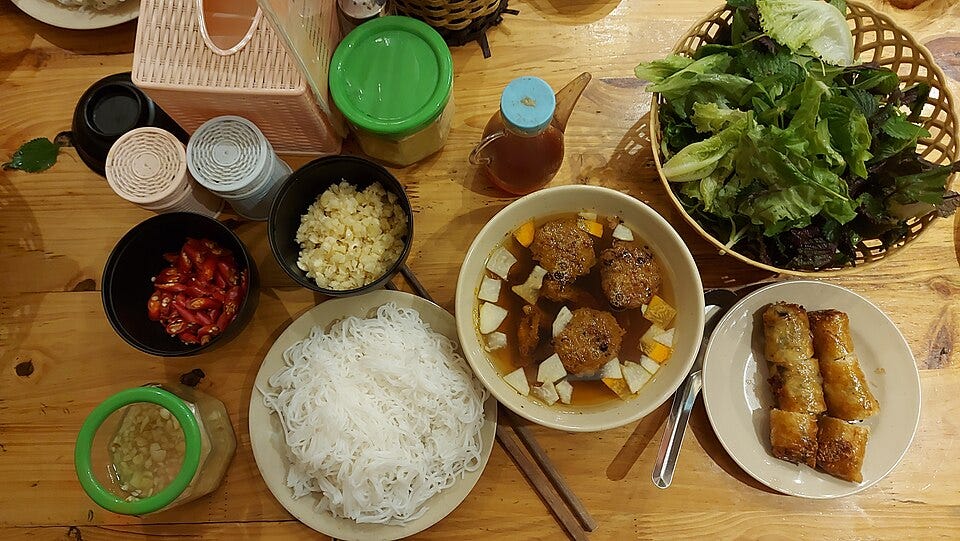
Hanoi doesn’t shout with flavor.
It builds it slowly.
If you’ve eaten Vietnamese food elsewhere in the world—especially southern-style dishes—you might expect bold sweetness, heavy herbs, and immediate contrast. Northern Vietnamese food works differently. It’s structured, restrained, and deeply tied to climate.
To understand Vietnam, you start with how the north eats.
Broth Is the Foundation
Northern cooking respects broth.
Soups are clearer. Flavors are layered instead of loud. Herbs are present but not overwhelming. Salt and umami do more work than sugar.
When you eat in Hanoi, you notice balance first—not intensity.
This is food designed for cooler air and long mornings.
Less Sweet, More Subtle
Southern Vietnamese cuisine leans sweeter due to climate and ingredient availability. In the north, sweetness takes a step back.
Dishes feel:
Cleaner
More savory
More measured
Nothing overwhelms the palate. You’re meant to eat steadily, not react dramatically.
For first-time visitors, this makes northern food easier to understand.
Street Food Is Structured, Not Chaotic
Hanoi’s street food scene feels organized.
Certain streets specialize in certain dishes. Vendors often focus on one item done repeatedly for years. Menus are short because repetition perfects technique.
You don’t wander randomly. You follow patterns.
And once you notice them, the city makes sense.
Breakfast Sets the Tone
Morning in Hanoi is serious business.
Sidewalk stools fill early. Steam rises from bowls. Vendors work with rhythm. Breakfast isn’t rushed—it’s functional, communal, and grounding.
If you skip breakfast culture here, you miss half the story.
Climate Shapes Flavor
Northern Vietnam has seasons. February is cooler, which makes warm broths and grilled meats feel natural rather than heavy.
It’s also worth noting that Chinese New Year in 2026 falls on February 17, affecting China, Taiwan, Hong Kong, Macau, and South Korea significantly. Vietnam celebrates its own Lunar New Year (Tết), and around this period:
Some small family-run spots may close temporarily
Festive dishes appear
The city feels quieter in daylight
If you plan properly, this timing can enhance your food experience rather than limit it.
Food That Reflects the City
Hanoi is dense but deliberate.
Its food mirrors that personality. Nothing feels accidental. Nothing feels excessive. Meals are practical, comforting, and built for repetition.
You don’t chase “the best.”
You find a place that works—and return.
That’s how Hanoi teaches you how to eat.
FAQ
How is Hanoi food different from southern Vietnam?
Hanoi food is less sweet, more broth-driven, and generally more restrained.
Is Hanoi good for food travel?
Yes. It offers structured street food culture and deeply rooted culinary traditions.
Is February a good time to eat in Hanoi?
Yes, especially for warm broths and seasonal dishes.
Does Lunar New Year affect food availability?
Some small shops close temporarily, but festive dishes appear.
Is Hanoi street food safe?
Yes, when choosing busy stalls with high turnover.