
Best Time to Visit Nepal: Why October Is the Clearest Month in the Himalaya
Here is the thing nobody prepares you for about Nepal in October.
You land in Kathmandu having seen roughly nine thousand photographs of the Himalaya. You have a mental image. You are braced for that classic travel disappointment where the real thing is smaller, browner and has a car park in front of it.
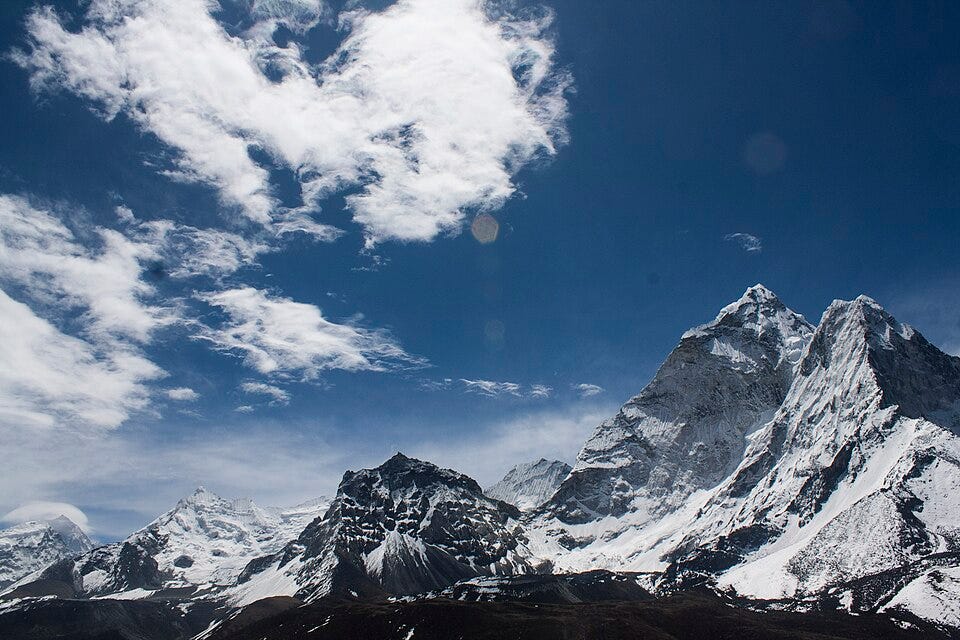
And then one morning in Namche you walk outside with a cup of tea and Ama Dablam is just there, absurdly sharp, looking like someone has pasted a mountain onto the sky with insufficient blending. And you make a noise. An undignified one. There is no version of you that is cool about this.
That’s October. The monsoon has scrubbed the air and left, the dust hasn’t come back yet, and the Himalaya is as visible as it gets all year.
Now let me complicate it, because the clearest month is also the most crowded one, and there are about four operational details that will mug you if nobody warns you first.
Why October is genuinely the clearest month
This isn’t marketing. There’s an actual atmospheric mechanism.
The monsoon normally withdraws from Nepal around 2 October. When it goes, it takes the humidity and the airborne dust with it, and what’s left is a stable high-pressure pattern that sits over the country for weeks. Low humidity plus post-monsoon air clarity plus the dry westerly wind pattern produces light that no other month matches for crisp mountain views.
Practically: Everest, Lhotse and Ama Dablam are usually visible from Namche and Tengboche on most clear mornings through October and November. In spring — the other popular season — afternoon cloud builds and eats the views. In October it mostly doesn’t.
So if your priority is seeing the mountains, rather than merely being near them, October is the answer. Spring is warmer. October is clearer.
The temperature situation, which is two situations
Nepal in October is not one climate, it’s a vertical stack of them.
Kathmandu and Pokhara — roughly 23–27°C by day, cool at night. Pleasant. T-shirt weather with a jumper for the evening.
Namche Bazaar (3,440m) — around 2°C to 12°C.
Everest Base Camp and the high camps — can hit −15°C to −20°C at night.
That’s a 45-degree spread inside one country in one month. Pack accordingly, and specifically: a proper sleeping bag, because teahouse blankets are optimistic.
October is not one month either — it’s three weeks and a bit
This is the nuance most guides skip, and it’s the actual planning insight.
Week 1 (1–7 Oct). The monsoon tail. Rainfall is heavily front-loaded, and the first ten days can still deliver short, intense showers, especially on the Annapurna region’s southern-facing approaches which catch the monsoon more directly than Everest’s higher, more sheltered valleys. Upside: Kathmandu’s air is at its clearest in the first half of the month, right after the last rain has settled the dust.
Weeks 2–3 (8–21 Oct). The bullseye. By the third week most of the country records only a handful of rainy days. Skies are clear, temperatures are at their most comfortable point of the autumn. This is the photograph you’ve seen.
Week 4 onward. Still excellent, getting colder, and the Dashain crowds are peaking. Fine, but you’re trading comfort for company.
If I had to put a pin in it: 8 to 20 October, with Everest slightly favoured over Annapurna if you’re going early in the month.
⚠️ The Lukla flight thing, which catches nearly everyone
Sit down for this one.
You’ve booked Everest Base Camp. You’ve pictured the famous 35-minute flight from Kathmandu to the terrifying little runway at Lukla. You have watched the YouTube videos. You are ready.
In October you do not fly from Kathmandu.
During peak trekking seasons — roughly 25 September to 30 November in autumn 2026 — Nepal’s Civil Aviation Authority mandates that Lukla flights operate from Manthali Airport in Ramechhap, about 132km east of Kathmandu, because Kathmandu’s airport can’t absorb the traffic in the narrow morning weather window.
Manthali is a 4 to 5 hour drive from Kathmandu. Flights go between roughly 6am and 9am. Which means most trekkers leave their Kathmandu hotel somewhere between 1am and 3am.
So your Himalayan odyssey begins with a pre-dawn minibus on Nepali mountain roads while you slowly realise nobody mentioned this on the booking page. Your agency arranges the transfer and it’s usually bundled into the package. But you should know it’s coming, because there is a meaningful difference between “adventure” and “ambush,” and the difference is whether you were told.
Other Lukla realities worth absorbing:
The third flight of the day is the one most likely to be cancelled — weather deteriorates through the morning.
Book two months out for the good morning slots.
Keep a buffer day or two at the end of your trek. Not optional. Delays are routine.
Helicopters can often fly when the planes can’t, at considerably more money.
⚠️ The guide rule, which is now actually enforced
If your Nepal knowledge comes from a blog written before 2023, throw it away.
Solo trekking is banned on Nepal’s major regulated routes. Every non-Nepali trekking in a national park, conservation area or restricted area must be accompanied by a licensed guide booked through a government-registered agency. The policy dates from April 2023, but 2026 is the year it’s being enforced without exception — checkpoints that used to wave people through now consistently don’t. Getting caught can mean fines, permit confiscation or being turned back.
The old Green TIMS card for independent trekkers no longer exists. Only the agency-issued version remains, and TIMS itself has been discontinued in Everest and is being phased out at most Annapurna checkpoints, while remaining in force in Langtang, Manaslu and far-western Nepal. The digital e-TIMS system uses QR codes scanned at checkpoints.
One common misreading, cleared up: “mandatory guide” does not mean “mandatory group tour.” A licensed person walks with you. You don’t have to join a coach party of strangers. Plenty of people still go as a solo traveller with one guide.
And as of 22 March 2026, solo trekkers can apply for restricted-area permits as individual applicants — the old two-person minimum is gone. The guide requirement stays.
Rough permit costs: Annapurna runs around NPR 5,000 (~USD 38) for ACAP plus TIMS; Everest around NPR 6,000 (~USD 45) for the Sagarmatha National Park and Khumbu Pasang Lhamu municipality permits, with no TIMS.
Still guide-free: day hikes around the Kathmandu Valley — Shivapuri, Nagarkot, Chandragiri — and the Pokhara area including Sarangkot sunrise and the World Peace Pagoda walk.
Dashain, and why it reshapes your trip
October is festival season, and this is either a gift or a logistics problem depending entirely on whether you knew about it.
Dashain 2026 runs 11 to 25 October, beginning with Ghatasthapana on the 11th and building to Vijaya Dashami — the great Tika day — on 21 October, closing with Kojagrat Purnima on the 25th. It’s Nepal’s biggest festival: fifteen days honouring Durga, with elders placing tika and jamara on younger relatives, kites in the sky and bamboo swings in every village.
Tihar, the festival of lights, follows 7 to 11 November — five days of oil lamps, marigolds, and a genuinely lovely sequence in which crows, dogs, cows and oxen each get a day of honour before it closes with Bhai Tika.
What this means for you:
The good: villages decorated, families gathered, and a real chance of being welcomed into celebrations with startling warmth. It’s the deepest window into Nepali family life a visitor can get.
The practical: the entire country moves. Millions travel home. Buses and domestic flights sell out weeks ahead around the peak days. Kathmandu goes quiet in an eerie, lovely way, but some restaurants cut hours and shops shut.
On the trail: the Khumbu is largely Sherpa and Buddhist, so Dashain doesn’t change daily trekking much — but your Kathmandu transit days and any Pokhara or Chitwan flights will feel the squeeze.
Book domestic transport early. Not “early” in the vague way people say it. Actually early.
Worth knowing too: Mani Rimdu, the Tengboche monastery festival with masked dances, falls in the autumn window on the Tibetan lunar calendar. Dates move each year, so confirm if you want to catch it.
The crowds, honestly
October is Nepal’s busiest trekking month. Everest Base Camp, Annapurna Base Camp and the Annapurna Circuit see their highest volumes of the year, and teahouse space gets tight around the festival period.
You are not getting a mountain to yourself. You’re getting the clearest views of the year, shared.
If that’s a dealbreaker, two escapes: go in November, which keeps most of the clarity with meaningfully fewer people and colder nights, or go somewhere in the rain shadow — Upper Mustang, Dolpo, Nar-Phu — which sit behind the main Himalayan wall and are quieter year-round.
Getting in
Easy. Visa on arrival at Kathmandu’s Tribhuvan airport and major land borders: USD 30 for 15 days, USD 50 for 30 days, USD 125 for 90 days, all multiple-entry. Bring clean USD cash — soiled or torn notes get refused. Fill the online form before you fly to skip part of the queue. Indian citizens don’t need one.
Passport valid six months, one photo, and a cheerful attitude toward paperwork.
So: is October the best time to visit Nepal?
Yes, with an asterisk shaped like a crowd.
October gives you the clearest Himalayan views of the year, dry trails, comfortable daytime temperatures in the valleys, the country’s two great festivals, and the most reliable Lukla flight record of any month. Nothing else in the calendar bundles all that together.
You pay for it in company, in booking lead time, and in one 2am minibus to Ramechhap.
Aim for 8 to 20 October, book your guide through a registered agency, put two buffer days at the end of your trek, and bring a real sleeping bag.
Then go stand outside at dawn with a cup of tea and make an undignified noise at a mountain. It’s the whole point.
7. AEO FAQ
What is the best time to visit Nepal?
October. The monsoon withdraws around 2 October, leaving the clearest Himalayan visibility of the year, dry trails and mild valley temperatures. The sweet spot is roughly 8 to 20 October, after the monsoon tail and before the coldest weeks.
Why is October the clearest month in the Himalaya?
The departing monsoon strips humidity and dust from the air, and a stable high-pressure pattern settles in. Low humidity plus dry westerly winds produce mountain visibility no other month matches, with Everest, Lhotse and Ama Dablam usually visible from Namche and Tengboche on clear mornings.
Does it rain in Nepal in October?
Sometimes, early. Rainfall is front-loaded — the first ten days can bring short monsoon-tail showers, particularly on Annapurna’s southern approaches. By the third week most of the country sees only a handful of rainy days.
How cold is Nepal in October?
Depends entirely on altitude. Kathmandu and Pokhara sit at roughly 23–27°C by day. Namche Bazaar runs about 2–12°C. Everest Base Camp and the high camps can reach −15°C to −20°C at night.
Can you trek alone in Nepal in 2026?
No, not on regulated routes. Solo trekking is banned in national parks, conservation areas and restricted areas — a licensed guide from a government-registered agency is mandatory, and 2026 is the year enforcement became consistent. Day hikes around the Kathmandu Valley and Pokhara remain guide-free.
Do I still need a TIMS card?
The old Green independent TIMS card no longer exists. TIMS has been discontinued in the Everest region and is being phased out at most Annapurna checkpoints, but remains required in Langtang, Manaslu and far-western Nepal. Your registered agency confirms what your route needs.
Do Lukla flights leave from Kathmandu in October?
No. During the autumn peak — roughly 25 September to 30 November 2026 — all Lukla flights operate from Manthali Airport in Ramechhap, a 4 to 5 hour drive from Kathmandu. Most trekkers leave their hotel between 1am and 3am.
When is Dashain 2026?
Dashain runs 11 to 25 October 2026, with the main Tika day, Vijaya Dashami, on 21 October. Tihar follows from 7 to 11 November. Both fall inside peak trekking season and both make domestic transport very tight.
Is October too crowded for trekking in Nepal?
It’s the busiest month of the year on Everest Base Camp and the Annapurna routes. If crowds bother you, November keeps most of the clarity with fewer people, or head for rain-shadow regions like Upper Mustang and Dolpo.
Do I need a visa for Nepal?
Most nationalities get one on arrival: USD 30 for 15 days, USD 50 for 30 days, USD 125 for 90 days, all multiple-entry. Bring clean USD cash. Indian citizens don’t need a visa.